Driven by the global growth of the automotive refinishing market and the rise of EVs, basic paint shop supplies are undergoing a major tech upgrade. Discover the latest trends in disposable spray cups, anti-static masking films, high-flexibility tapes, and net abrasives.
The global automotive refinishing market is experiencing steady growth, now approaching a $10 billion scale. Fueled by the rapid iteration of New Energy Vehicles (NEVs) and the soaring demand for "zero-defect" painting craftsmanship, even the most basic auto body shop supplies are undergoing a quiet revolution.
1. Disposable Spray Gun Cup Systems (Paint Preparation Systems)
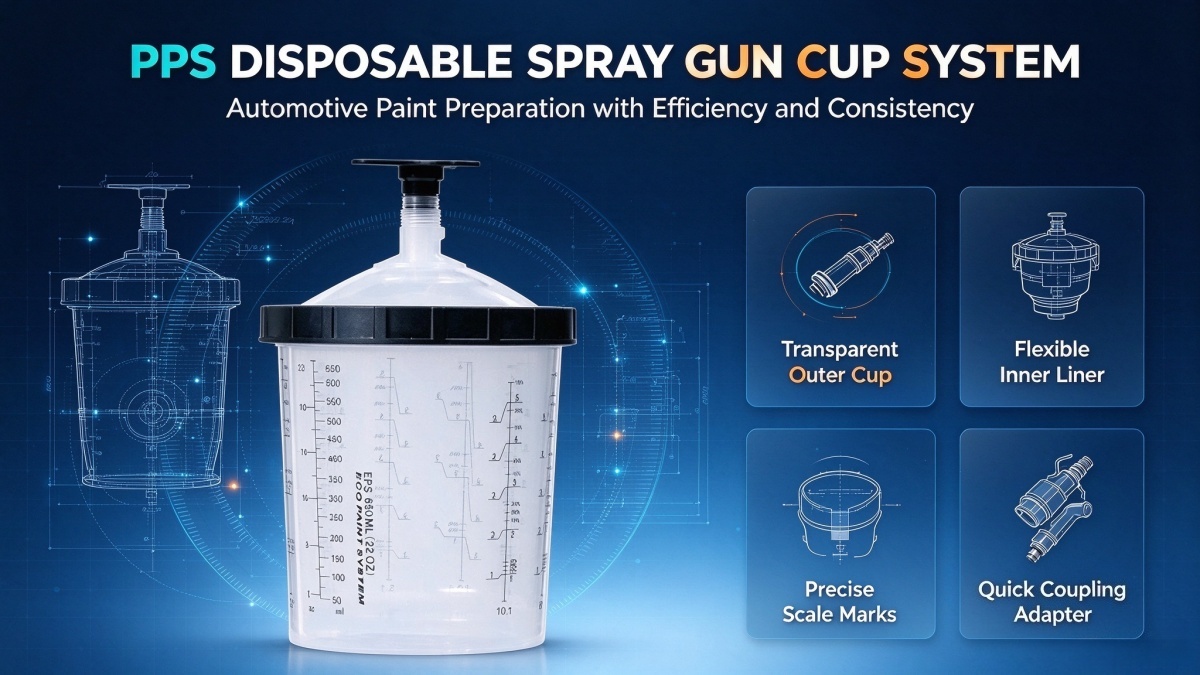
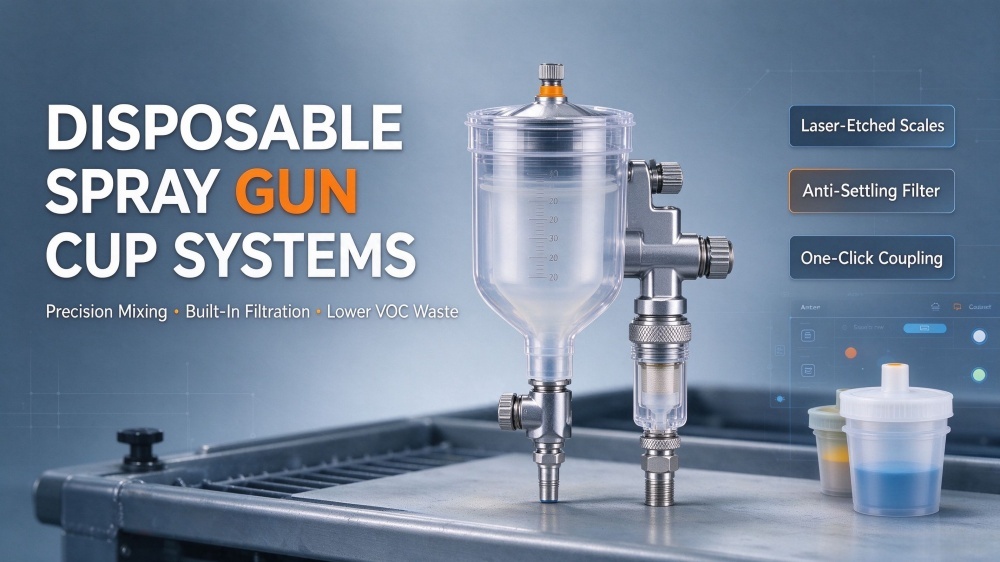
• The Global Shift to PPS: Traditional reusable paint cups, which require extensive cleaning with hazardous gun washers and chemical thinners, are being rapidly phased out. Industry data shows that disposable spray cup systems—featuring a rigid outer cup and a flexible inner liner—have officially become the shop standard.
• Error-Proofing & Quick-Coupling: To meet the strict mixing ratios required by waterborne paints and High-Solid (HS) clearcoats, modern spray cups feature laser-etched precise scale marks, integrated anti-settling filters (available in 125μm or 200μm meshes), and one-click quick-coupling adapters. By drastically reducing volatile organic compound (VOC) waste from cup washing, these systems directly cut environmental compliance costs for modern body shops.
2. Advanced Automotive Masking Films
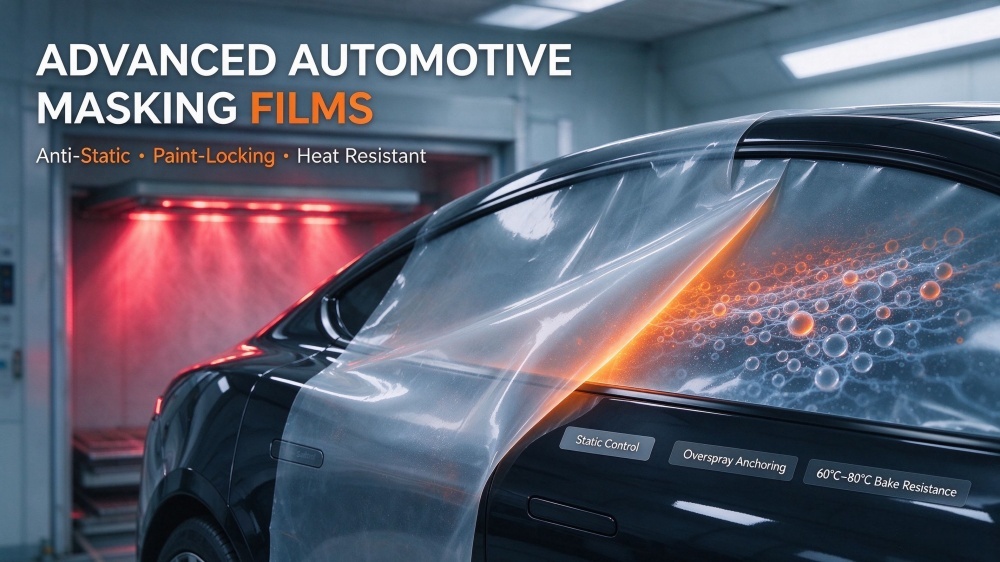
• Anti-Static & Paint-Locking Coatings: Standard plastic sheeting often generates static electricity during spraying, which attracts airborne dust and creates paint defects. The latest generation of high-performance car masking films features advanced anti-static treatments and specialized "paint-locking" surface coatings. This technology tightly anchors overspray to the film, ensuring that dried paint flakes won't flake off or blow onto wet clearcoats, completely eliminating secondary rework.
• High-Temperature Infrared & Bake Resistance: To withstand modern rapid-curing methods—such as short-wave infrared drying or standard baking booth cycles (60°C to 80°C)—the polymer formulas of these masking films have been upgraded. This prevents the film from melting, puncturing, or transferring ghost images and adhesive marks onto pristine paint surfaces under high heat.
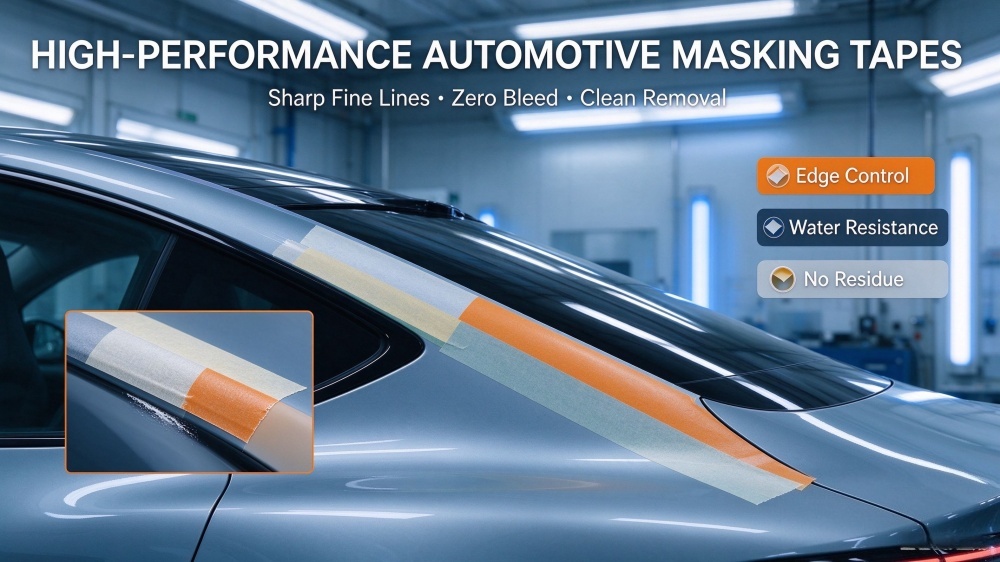
3. High-Performance Automotive Masking Tapes
• Sharp Fine-Line Painting & Zero-Bleed Quality Control: Leading masking solution pioneers have completely redefined quality standards for masking tapes to accommodate the complex body curves and razor-sharp body lines of modern electric vehicles. Advanced fine-line contour solutions deliver flawless color separation that looks as if it were drawn by a precision instrument, totally eliminating the bleeding, fuzzy edges, and paint bridging common with traditional tapes.
• Clean Removal & Waterborne Paint Compatibility: With the global mandate for eco-friendly waterborne refinish paints, traditional tapes often absorb water and lose adhesion. The latest automotive crepe paper tapes offer superior water resistance, ensuring zero bleed-through while guaranteeing clean removal without leaving adhesive residue or damaging the cured primer.
4. Revolutionary Net Abrasives (Dust-Free Sanding Discs)
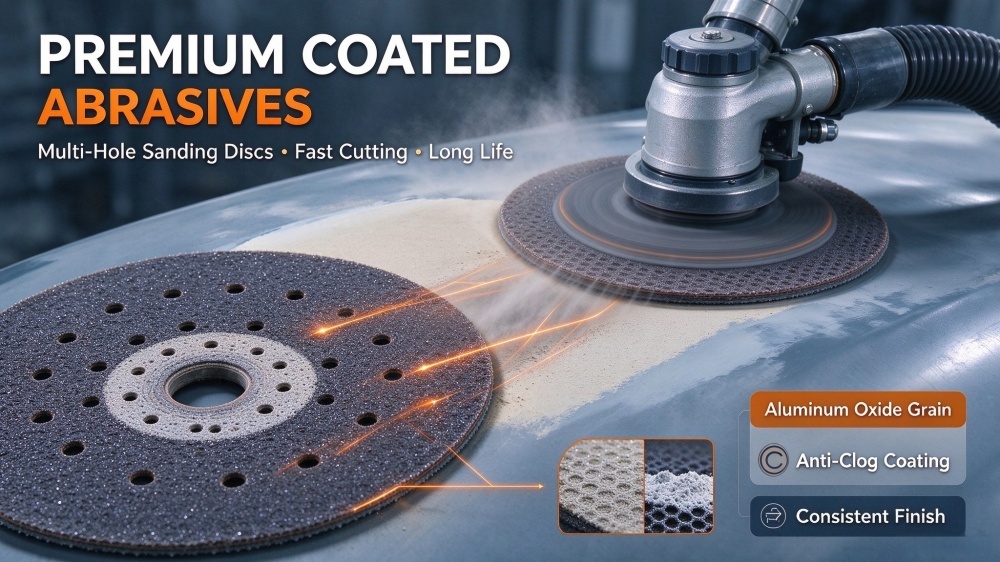
• The Explosion of Mesh Sandpaper Over Multi-Hole Discs: Traditional multi-hole sandpaper used for sanding body filler (bondo) and primers is being aggressively replaced by "clog-free net abrasives." The entire surface of a net abrasive disc is an open mesh, which enables seamless, full-surface dust extraction when paired with modern dust-free dry sanding systems, creating a truly dust-free environment.
• Self-Sharpening & Anti-Clogging Breakthroughs: Recent innovations in the abrasive industry have introduced advanced grains like ceramic grains and premium aluminum oxide blends. These minerals fracture during sanding to reveal fresh, sharp cutting edges (self-sharpening). Combined with a proprietary anti-clogging topcoat designed specifically for soft, sticky primer layers, the lifespan of a single disc is extended by 2 to 3 times, drastically lowering the overall consumable expenditure for collision centers.